
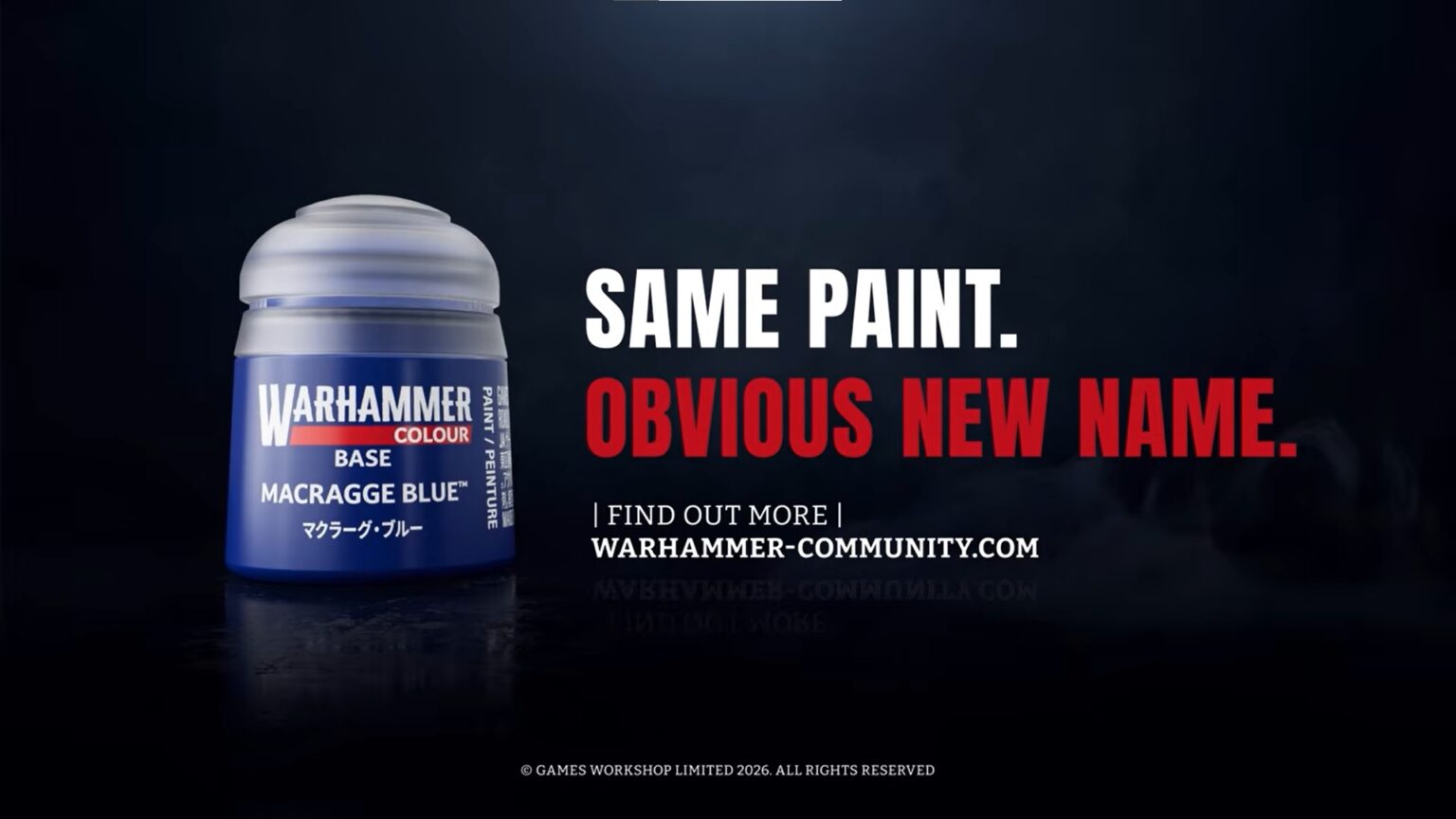
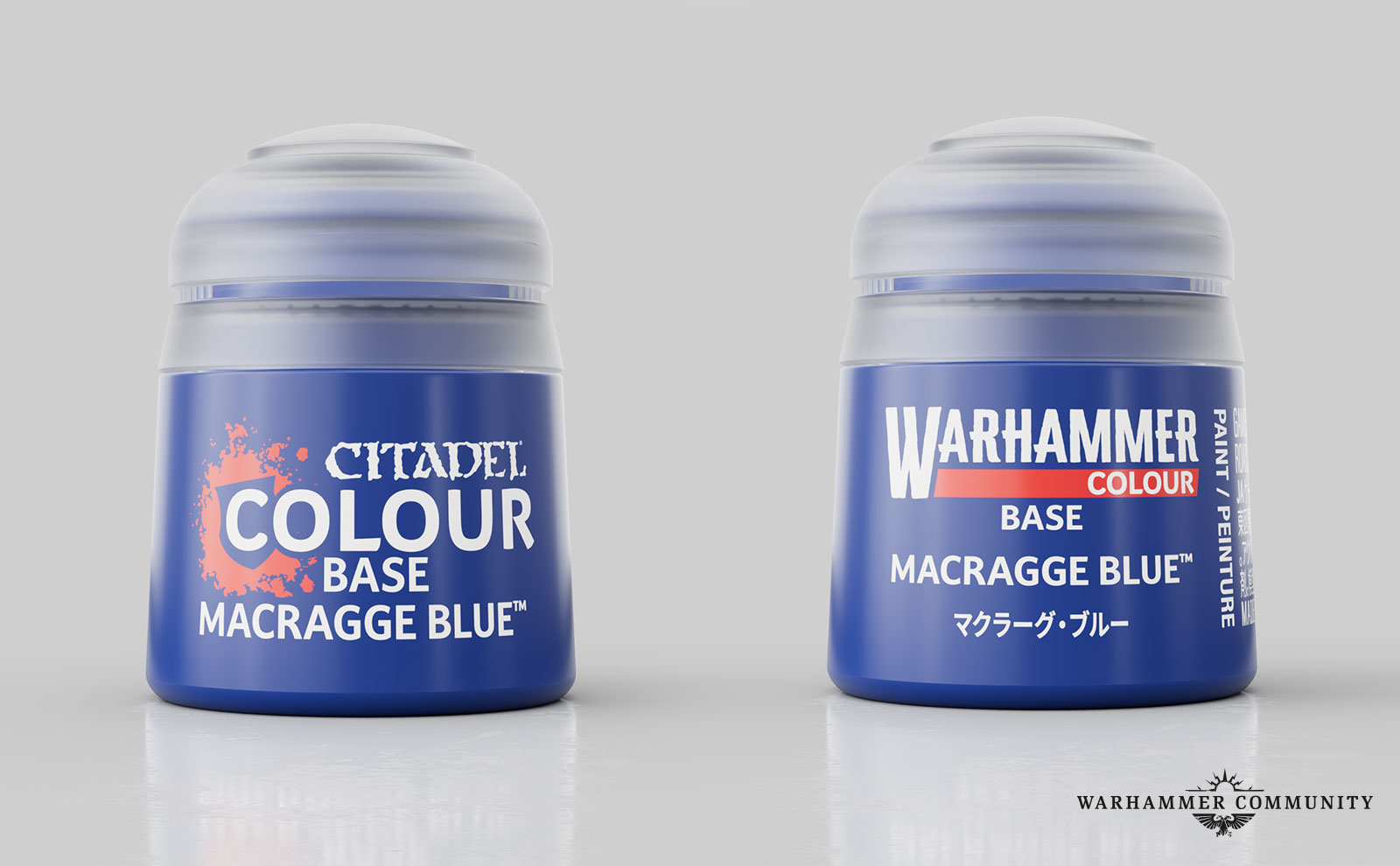
Games Workshop has decided that Citadel Colour is no longer called Citadel Colour. From now on, the paint brand will be known as Warhammer Colour. On paper, the change looks impeccably neat: same product, same formula, same pot, new name. Nothing dramatic. Nothing that should, in theory, justify a particularly intense reaction.
And yet, here we are.
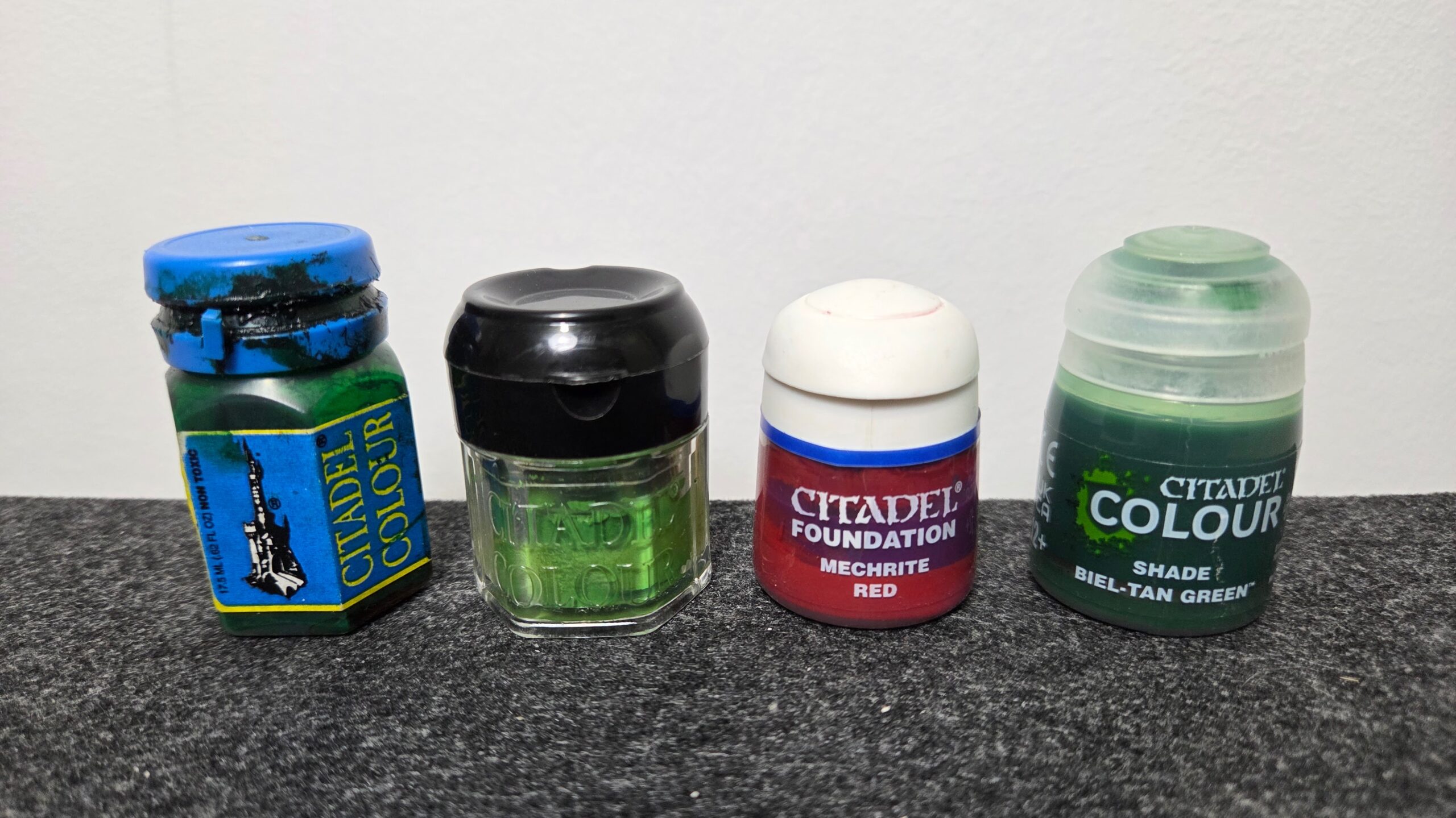
Because this is not just about paint. It is not even just about branding. It is about one of those perfectly rational corporate decisions that, once they land in the hobby, feel a little colder than they probably intended. Citadel was not just any brand. It was a name with weight. With memory. With echoes of White Dwarf, old catalogues, starter sets, dried-up pots, discontinued colours, and long afternoons spent learning to paint terribly before learning to paint halfway decently.
Games Workshop has touched a historic brand in order to do something very sensible: bring its commercial architecture into order under the Warhammer umbrella. The question is not whether it makes sense. It does. The real question is this: whether everything that makes sense is worth doing when you are speaking to a community that experiences this hobby not through reason, but through emotion
And that is where the clash lies.
Consistency with Warhammer’s other brands
Let us begin by granting Games Workshop the obvious point: the change makes sense. In fact, it makes a great deal of sense. For years now, the company has been refining a brand architecture increasingly centred around the name Warhammer. The stores are Warhammer. The communication is Warhammer. The universe pulling everything else forward is Warhammer. So, from the perspective of a boardroom, keeping a historic sub-brand like Citadel may have looked like a useful relic for veterans, but a less efficient one for the present.
And in that context, Warhammer Colour fits like a piece designed to complete the circle. Fewer layers, fewer nuances, less inherited history, more commercial clarity. Warhammer miniatures, Warhammer stores, Warhammer content, Warhammer paints. Everything perfectly aligned. Everything perfectly ordered. Everything perfectly… corporate.
What the company gains here is consistency. And consistency is a prized asset in branding.
Clarity for beginners
This is probably the strongest argument in favour of the change. To a veteran hobbyist, Citadel is a familiar word. To someone entering the hobby today through YouTube, TikTok, a shop, a video game, or a future TV series, it may not mean anything at all.
Warhammer Colour, by contrast, explains itself. It is immediate. It is functional. It is impossible to misread. It does not require prior context or hobby memory. It does not ask the newcomer to learn a family tree of brands. It tells them, plainly: this is the paint officially designed for Warhammer miniatures.
From that point of view, the rebrand is not just defensible: it is effective. Where Citadel Colour preserved heritage, Warhammer Colour maximises instant understanding.
The problem is that clarity almost always simplifies. And simplification, quite often, also means stripping away personality.
The community’s content instantly becomes outdated
This is where the cost of the change begins to show. For years, Citadel Colour has not just been a brand: it has been a shared language. A common code between Games Workshop, the community, painting channels, blogs, tutorials, beginner videos, and hobby conversations across half the internet.
“Use a Citadel.” “Apply Nuln Oil.” “This Citadel range covers better.” “Citadel vs Vallejo differences.” That entire archive does not disappear overnight, of course. But suddenly it is outdated at its most basic level: the name.
It is not a tragedy, but it is an awkward nuisance. One of those decisions that does not quite break anything, but still creates a small and unnecessary desynchronisation between the product and the enormous ecosystem of content that has surrounded it for years.
And for a brand that relies so heavily on the community, that is not a minor detail.
They are taking away more than just a logo
The real loss is not in the pot, the formula, or the shelf presence. It is somewhere else. It is in the bond.
Citadel was one of those brands that no longer fully belonged to the company that owned it, because it also belonged, in part, to the memory of the people who grew up with it. It was a word embedded in the culture of the hobby. It sounded like Warhammer, yes, but it also sounded like something with an identity of its own. Something with a biography. Something with a soul.
That is why so many people have greeted the announcement with irritation, irony, or indifference. Not because the change is going to ruin their miniatures. Not because tomorrow they are going to stop buying Mephiston Red. But because they sense, perhaps correctly, that a brand with personality is being sacrificed in the name of a simplification logic that benefits the company more than the hobbyist.
And that is where that deeply uncomfortable word for any marketing PowerPoint appears: nostalgia. Which is not foolish. Nor is it weakness. In this hobby, nostalgia is part of the glue.
What stays the same?
The pot design
The pot will remain the same as ever. The change is focused on the label and the name. Games Workshop has chosen to touch the brand, but not open the can of worms that is the container itself. Because if there is one thing the community has been arguing about for years, it is the pot format.
Other brands such as Army Painter, Vallejo, and Pro Acryl have turned the dropper bottle into the de facto standard for a huge number of painters. This format makes the use of a wet palette almost mandatory, but in return it gives you precise control over mixes and dilutions. Most importantly, because air does not enter the bottle, the paint can remain in good condition for 5 to 10 years.
On the other hand, Games Workshop remains attached to its flip-top design. While it is true that this style of pot makes things easier for beginners by allowing paint to be taken directly from the container, it is also a format burdened with old and often repeated criticisms. The main flaw is this: dried paint constantly builds up in the lid, and the airtight seal degrades very easily. The pots need frequent cleaning, otherwise air gets in and they dry out completely within a few months.
The impression is that Games Workshop keeps this format not because it is the best one, but because it is the one that suits them most. Lower durability means more sales.
The formula
According to the company itself, the paint remains exactly the same. And that is probably the most important thing for anyone who simply wants to know whether their colours will behave the same way they did yesterday.
The price
Warhammer’s community managers have already confirmed on Facebook that the price will not go up for now. Games Workshop is the undisputed leader in the miniatures market, but in the acrylic paint market it is competing against brands that are highly competitive in both quality and price.
Community opinion
The community’s initial reaction has been quite revealing: more ironic resignation than genuine enthusiasm. The announcement does not seem to have triggered many “finally” reactions. Quite the opposite. The dominant feeling is that this is a boardroom move, correct in branding terms, but emotionally sterile.
Many hobbyists have read it as an unnecessary change. Something nobody asked for. Something that does not improve the hobby experience in any tangible way, yet still erodes a name with history, identity, and symbolic weight.
The less diplomatic translation would be this: yes, it makes sense; no, it was not necessary.
What now?
In practical terms, not much will probably change. People will keep buying their usual colours, checking conversion charts, watching old tutorials, and painting with the same habits as before. And within a few months, many will have grown used to living with the new name.
From a branding point of view, Warhammer Colour is a clean and coherent change. From the hobbyist’s point of view, it flattens an identity with more than 40 years of history, one that has been accompanying many of us since childhood.
Games Workshop has made a rational change in a hobby driven by profoundly irrational forces: attachment, memory, habit, pride of belonging, nostalgia. As Blaise Pascal said: the heart has reasons that reason does not understand. Will this corporate manoeuvre work? In 40 years, we will find out. Rest in peace, Citadel.
